After several months of strong stock market performance, investors have been reminded that markets don’t always move higher in a straight line. As of Friday, November 20th, the S&P 500 has declined approximately 12% from its October high, while the technology-heavy Nasdaq has fallen about 18%.
Much of the recent selling has been driven by concerns about how the resignation of the CEO of Nvidia will affect future AI development and whether the enormous investments being made in artificial intelligence will generate the profits investors have been expecting. Persistent inflation and concerns about additional interest rate increases have also contributed to the downturn. While these headlines can certainly be unsettling, it’s important to keep the recent declines in perspective.
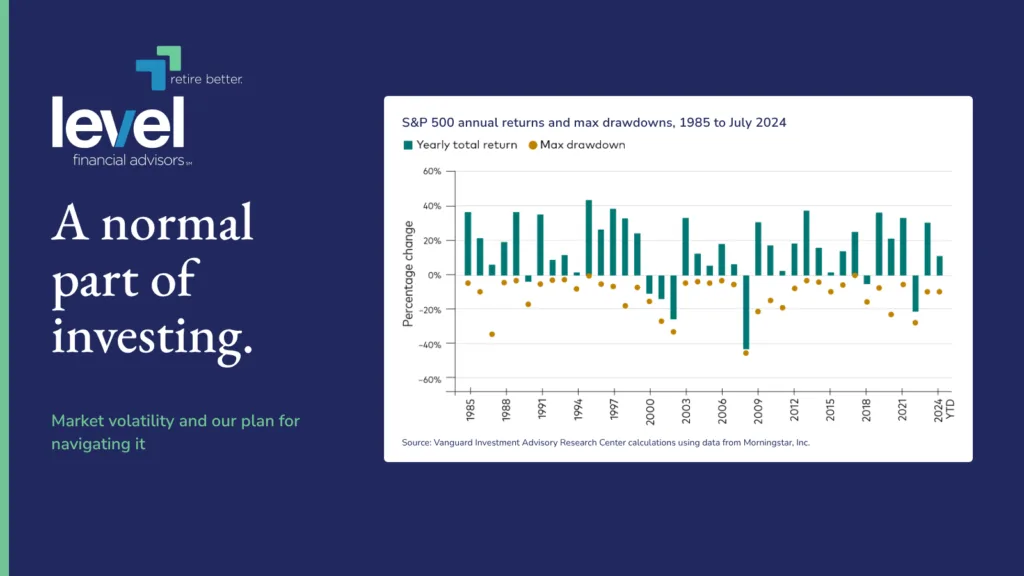
Stock market declines are a completely normal part of investing
Historically, the S&P 500 has experienced declines of 5% or more roughly three times per year, while declines of 10% or more have occurred approximately once every 12–18 months. In fact, Vanguard’s research shows that the S&P 500 has experienced a median decline of approximately 10% within a calendar year, even though many of those years ultimately finished with positive returns.
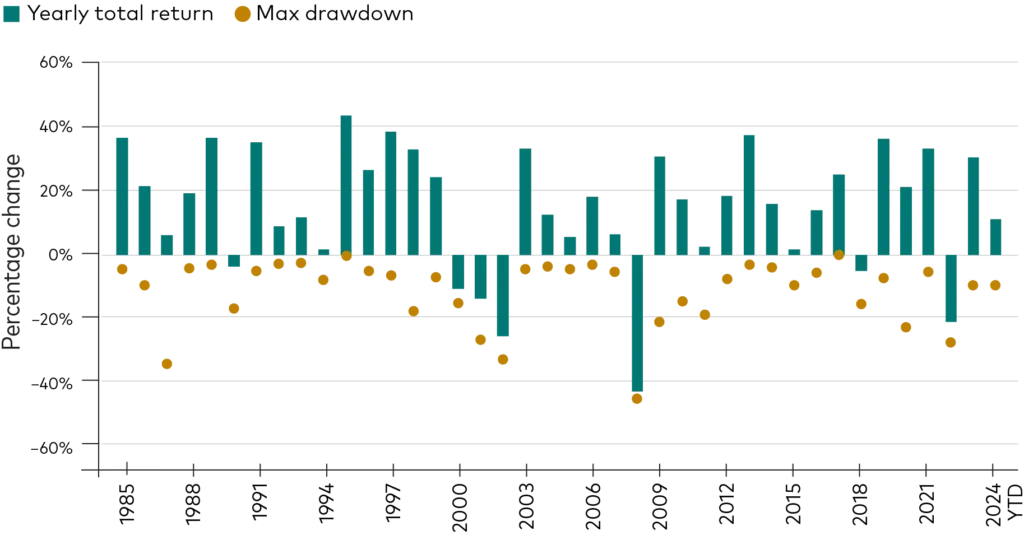
Source: Vanguard Investment Advisory Research Center calculations using data from Morningstar, Inc.
Here’s another way to look at the current downturn
The S&P 500 is now trading at approximately the same level it reached in mid-April of this year. In other words, we’ve largely given back about seven months of gains, rather than experiencing some unprecedented market event. That’s certainly disappointing, but it’s also part of the normal ups and downs that come with long-term investing.
Our plan during this downturn
1) Use dividends and interest to cover cash withdrawals. We’re focused on making sure our clients can continue taking their regular portfolio withdrawals without having to sell stocks while prices are depressed. Whenever possible, we’ll use the dividends and interest generated by your investments to fund those withdrawals. If additional cash is needed, we can turn to our short-term, high-quality bonds, which have actually increased in value over the past month. This flexibility is one of the important reasons we maintain diversified portfolios rather than investing everything in stocks.
2) Capture any losses to reduce your tax bill. We’re also looking for opportunities that market declines can create. For clients with taxable investment accounts, we’ll look to capture available investment losses that can help reduce taxes this year or in future years. This strategy, called tax-loss harvesting, allows us to potentially turn an unpleasant market decline into a tax-saving opportunity.
3) Rebalance to take advantage of low stock prices if the decline worsens. If falling stock prices cause your portfolio to drift too far from its intended mix of stocks and bonds, we’ll look to rebalance. This generally means selling fixed income that has held up better and buying stocks at low prices. While buying stocks during a downturn may feel uncomfortable, maintaining a disciplined rebalancing strategy has historically been a valuable part of long-term investing. We don’t know exactly when the market will recover, but we do know that lower prices can create opportunities for patient investors.
The bottom line
Market downturns are never enjoyable, but they’re something we’ve planned for. Our focus remains on protecting your ability to meet your financial needs today while keeping your investments positioned for the years ahead.
As always, please don’t hesitate to contact us at 716-634-6113 if you’d like to discuss your portfolio or have any specific concerns.
Steven Elwell, CFP®
Partner, Chief Investment Officer