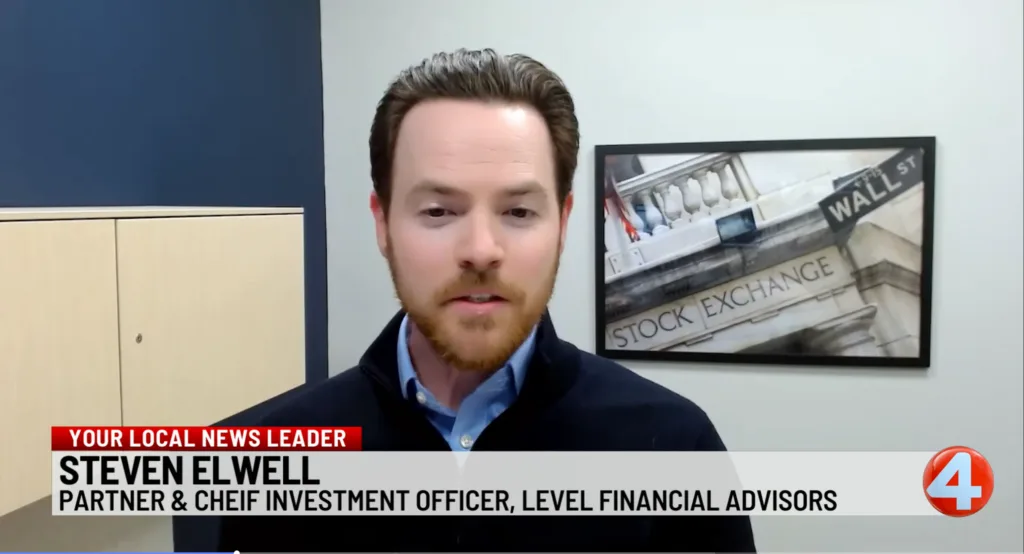
When technical problems caused bank disruptions at several large U.S. banks on Monday, News 4 Buffalo (WIVB) turned to local experts to help viewers make sense of it. Our Partner and Chief Investment Officer, Steven Elwell, CFP®, joined the broadcast. He talked about what was happening and what people should, and should not, do about it.
You can read the full report here: Financial experts weigh in on bank disruptions.
What caused the bank disruptions
Customers across the country reported trouble getting into their accounts online and withdrawing funds. The reports began in the afternoon with J.P. Morgan Chase. The bank said the issue was a software bug affecting internal systems, not a cyberattack. Fred Floss, a professor of economics and finance at Buffalo State University, also appeared in the story. He described it as a software error rather than a sign that banks were running out of money.
What Steve told viewers about the bank disruptions
1. Don’t overreact. Steve acknowledged that many people were left wondering what was going on. His message was to resist rash action when it isn’t necessary. A temporary outage is frustrating, but it is not, by itself, a reason to move money or change a financial plan.
2. Your bank deposits are insured. Steve reminded viewers that money held in a bank is backed by government-set limits. Those limits are $250,000 for a single person and $500,000 for a jointly owned account with a spouse. If something went wrong at your bank, your money is still safe within those limits.
3. Investment risk is a different matter. Steve drew a clear line between deposits and investments. When it comes to investments, he said, “that’s where risk is real.”
Bank disruptions and your plan: practical takeaways
- Check your coverage. Insurance limits apply per depositor, per insured bank, per ownership category. Confirm how your accounts are titled and where they are held, especially if you keep large balances at one bank.
- Keep access to cash. A modest cushion on hand, or an account at a second institution, can cover essentials during a short outage.
- Let your plan lead, not the headline. Decisions made in the moment can be hard to undo. A plan built around your goals is the best guide when the news is loud. If you would like to talk through yours, contact our team.